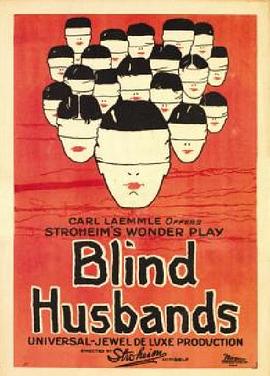
Two differences between this Austrian version and the generally available American version are immediately obvious they differ both in their length and in the language of the intertitles. The American version is only 1,883 metres long - at 18 frames per second a difference of some 7 minutes to the Austrian version with 2,045 metres. Whereas we originally presumed only a negligible difference, resulting from the varying length of the intertitles, a direct comparison has nevertheless shown that the Austrian version differs from the American version both in the montage and in the duration of individual scenes. Yet how could it happen that the later regional distribution of a canonical US silent film was longer than the original version The prevalent American version of Blind Husbands does not correspond to the version shown at the premiere of 1919. This little-known fact was already published by Richard Koszarski in 1983. The film was re-released by Universal Pictures in 1924, in a version that was 1,365 feet (416 metres) shorter. At 18 frames per second, this amounts to a time difference of 20 minutes! Titles were altered, snippets of action removed and at least one major scene taken out entirely, where von Steuben and Margaret visit a small local chapel. (Koszarski) From the present state of research we can assume that all the known American copies of the film derive from this shortened re-release version, a copy of which Universal donated to the Museum of Modern Art in 1941. According to Koszarski the original negative of the film was destroyed sometime between 1956 and 1961 and has therefore been irretrievably lost. This information casts an interesting light on the Austrian version, which can be dated to the period between the summer of 1921 and the winter of 1922. Furthermore, the copy is some 200 metres longer than the US version of 1924. If one follows the details given by Richard Koszarski and Arthur Lennig, this means that, as far as both its date and its length are concerned, the Austrian version lies almost exactly in the middle between the (lost) version shown at the premiere and the re-released one.A large part of the additional length of the film can be traced to cuts that were made to the 1924 version in almost every shot. Koszarski describes how the beginning and the end of scenes were trimmed, in order to speed up the film. However, more exciting was the discovery that the Austrian version contains shots that are missing in the American one - shotscountershots, intertitles - and furthermore shows differences in its montage (i.e. the placing of the individual shots within a sequence). All this indicates that Die Rache der Berge constitutes the oldest and most completely preserved material of the film.
查理(克里斯?奥唐纳 Chris O'Donnell 饰)是一个普通的中学生,他因为见证着一件恶作剧但又不想出卖朋友,于是面临着一道艰难的选择题——要么坦白,要么被学校勒退。而史法兰(阿尔?帕西诺 Al Pacino 饰)是一个退伍军官,因为意外失明,人生从顶点的辉煌滑落谷底。
自从两人的人生有了交集,命运的转折慢慢清晰。史法兰打算结束失去了意义的生活,于是在查理的陪伴下,尽情享受着人生最后一趟出行。他吃最美味的佳肴,买光鲜的汽车,在狭窄的街道上飚车,住在豪华的套房里,跟随陌生女子的袅袅香水味,跳一段优雅性感的探戈……极乐的疯狂后,他拿枪对准了自己的头颅。然而,查理声嘶力竭的劝阻改变了一切,曙光亦渐渐在这个老人心中重新升起,二人情深如父子。
史法兰在学校礼堂激昂演说,挽救了查理的前途,讽刺了学校的伪善。二人在互相鼓舞中得到重生。